Design
Timeless Design, Natural Beauty
Our mid-century designs remain relevant and retain their appeal today. But their true beauty comes from the colours, grains and other natural features of the timber we use to make them.
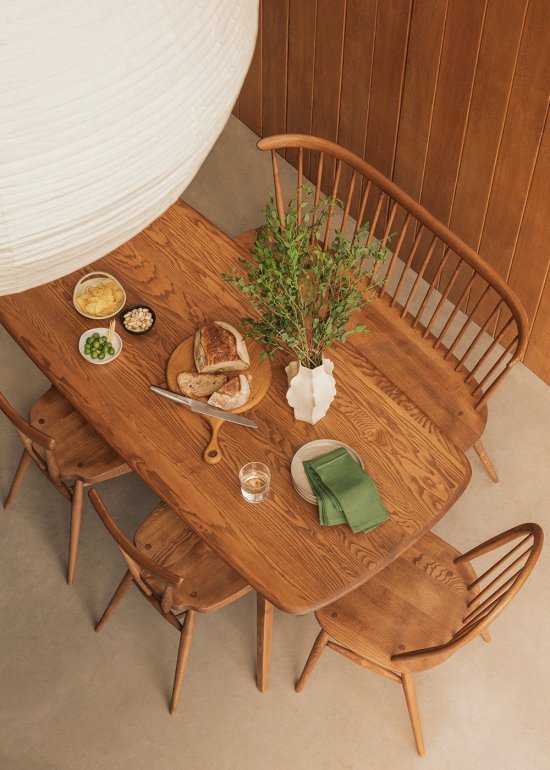
The Plank Table, Stacking Chairs and Heritage Loveseat and Chair, finished in Vintage stain (OG).
Our designs have their origins in the 1950s. This was an era of rapid technological progress, rising economic prosperity and profound social change that gave rise to a corresponding aesthetic, Mid-Century Modern, of which ercol furniture is often cited as a classic exemplar.
That mid-century style is very much of its time: sleek, functional, optimistic and forward-looking; design for an age when humanity began to venture into the realms of outer space, and here in Britain at least, we were confidently assured we’d ‘never had it so good’. Its clean lines and emphasis on ergonomics were informed by a wide range of influences, from the pre-war Bauhaus and Modernist movements to Scandinavian minimalism and American industrial design.
Yet despite this clear and distinctive heritage, our furniture is also frequently described as ‘timeless’. That’s because it transcends fashion and trends, and still feels relevant almost 80 years later.
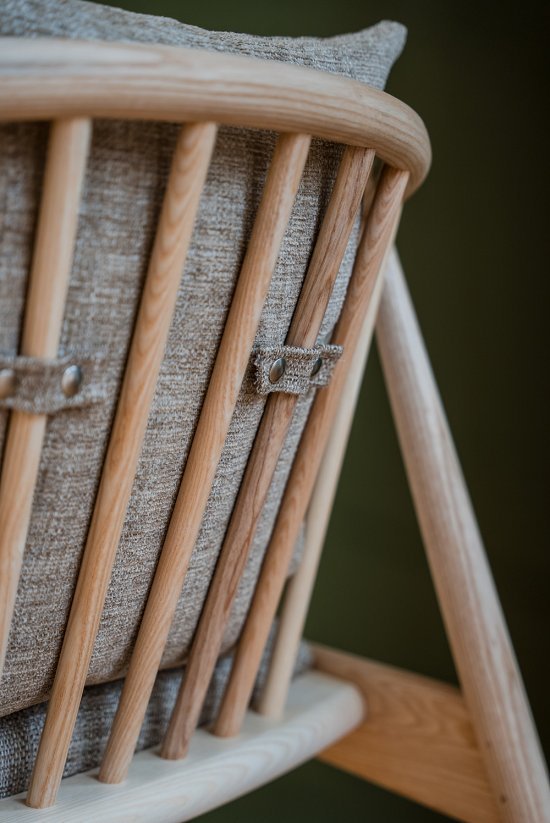
The Reprise Chair
Our emphasis on function and comfort, as well as aesthetics, ensures our furniture remains practical and pleasing to use as people’s needs and living spaces evolve. It’s also a singularly British take on Modernism – straightforward, restrained, well-made – that feels familiar and comfortable across the generations.
We design ageless furniture with simple outlines and gentle curves which is free of superfluous ornamentation and decoration, that will easily sit with different décor styles, and feel equally at home in a traditional cottage, loft conversion or new-build home.
The real key to our furniture’s timelessness, though, is our materials and methods. For us, the natural variation in wood is its greatest asset, something to celebrate and a source of uniqueness and authenticity in every piece.
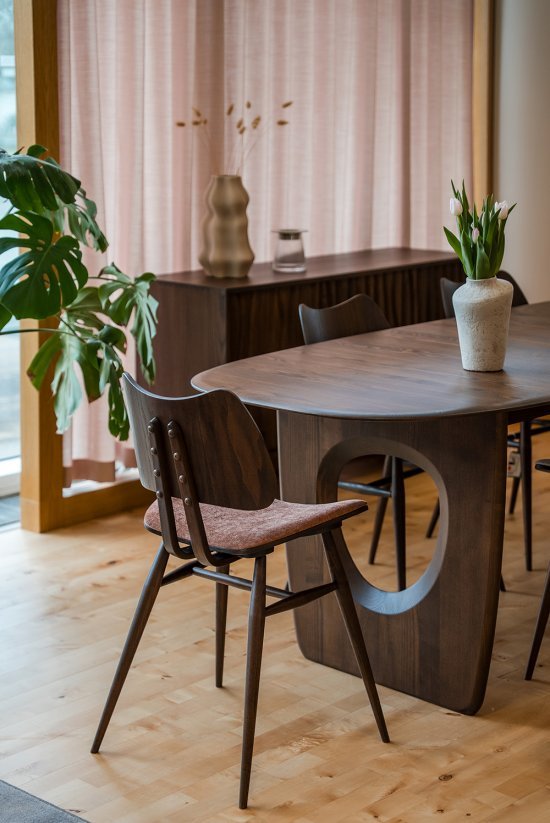
The Butterfly Chair pictured here alongside the Highmoor Dining Table in Dark (DK) finish.
Our solid wood ages gracefully, acquiring a patina with the years that only adds to its charm. We also choose finishes that show off the natural beauty of the grain and other features in the wood, adding warmth and character without the need for superfluous styling. Our furniture has a lightness that doesn’t date, and an inherent strength that keeps it looking its best for decades.
These are qualities and techniques that our founder, Lucian Ercolani, understood completely. His practical training in furniture-making gave him direct, hands-on experience and knowledge of traditional construction and woodworking techniques; yet he also embraced industrial production methods, including steam-bending technology – which at the time was a real innovation, particularly when applied to beech and now ash.
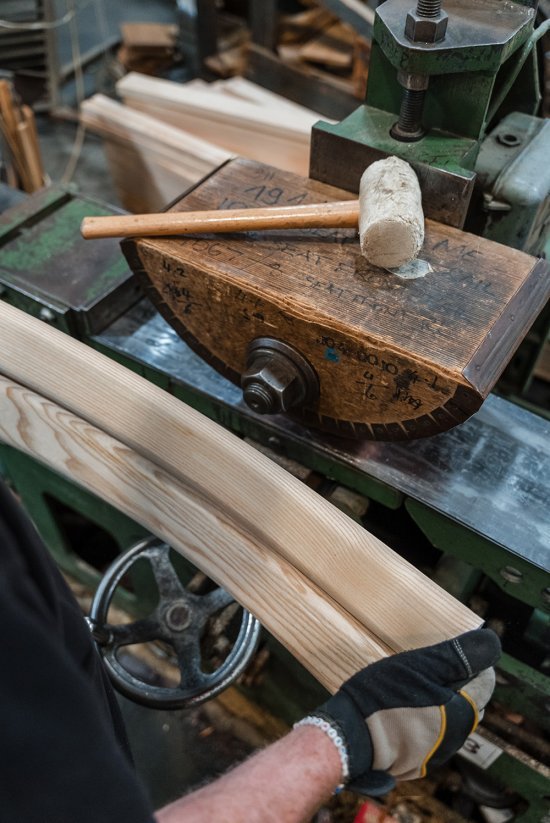
Steam Bending has been an industry method practiced at ercol for over a century.
Similarly, our belief in letting the wood’s natural beauty shine through is all down to Lucian who, for all his Italian origins, had a reverence for timber that was positively Scandinavian in its intensity. He was also thinking sustainably long before the word entered common currency, choosing home-grown hardwoods like beech, ash and elm not just for their beauty, but also for their local availability, durability and longevity. As both designer and maker, he celebrated timber in all its infinite variation. 100 years later, we still do.
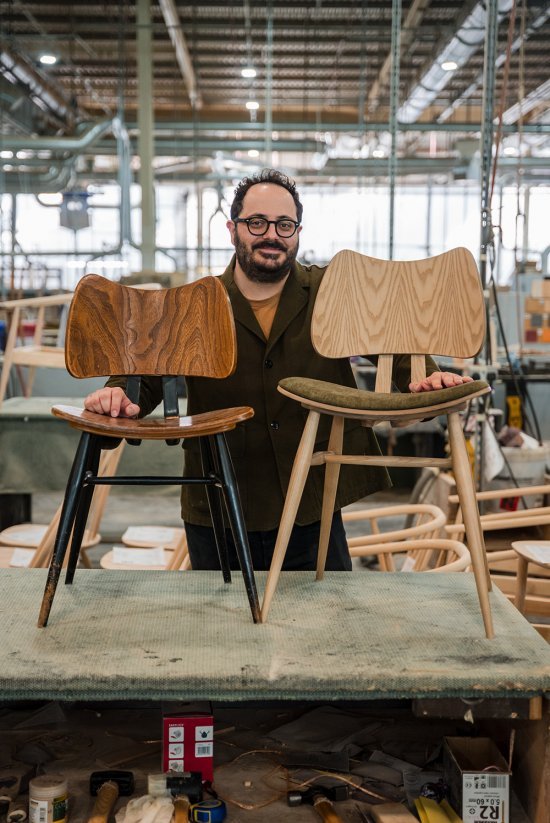
A comparison of the iconic Butterfly Chair, with ercol Chairman, Henry Tadros. Left: 1950’s design in Elm Ply and a two-tone finish. Right: 2025 design in OA finish and the recent addition of the upholstered seat cushion.
If you would like to keep updated with the latest blogs, new arrivals and the latest offers from ercol, you can sign up to our newsletter here.