Heritage
A Gift From Nature
Every piece of timber is as unique as a human fingerprint, giving us an endless source of detail, character and fascination that we celebrate and put at the very heart of our products.
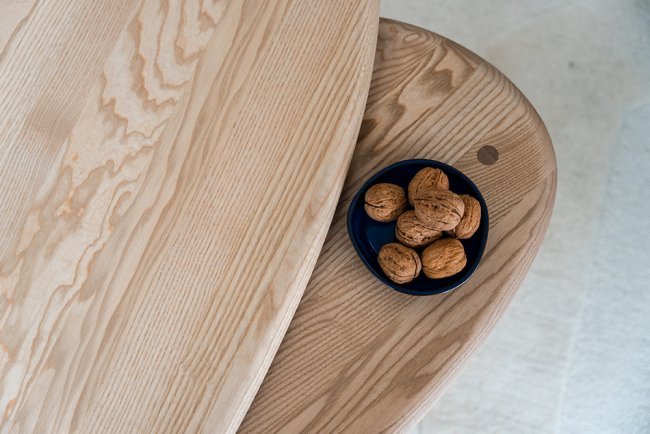
The Pebble Nest Coffee Table, showing a variety of natural markings and patterns
At the risk of stating the obvious, no two sections of timber are alike, because no two trees are alike. The difference begins at the species level. Oak has a coarse grain and characteristic pale streaks, called medullary rays, radiating out from the centre of the trunk, created by special cells that transport water and nutrients sideways across the growing tree, rather than up and down. In contrast, ash is lighter in colour and has a bold, straight and open grain; while walnut is a rich, chocolate-brown with a fine, smooth grain naturally embellished with beautiful waves, swirls and curls, known as figuring.
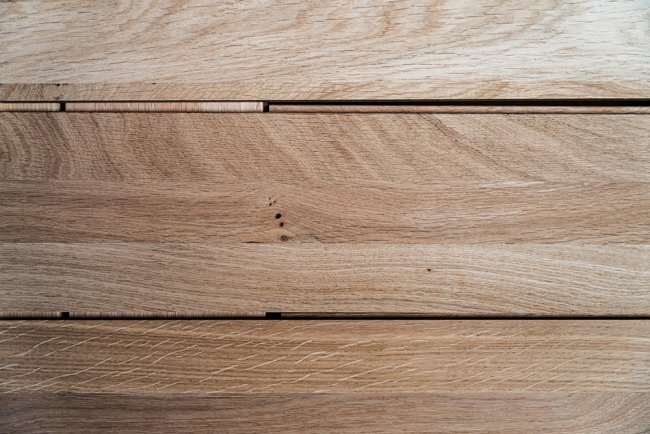
Medullary rays are created by special cells that transport the water and nutrients sideways across the growing tree
All timber can show knots and dots, formed where branches or buds have grown out of the tree trunk, in a huge array of shapes, sizes and colours.
How an individual oak, ash or other tree develops depends on its growing conditions, with climate, soil, water availability and altitude all exerting their influence. In colder, higher places, trees grow more slowly, producing tighter growth rings and denser timber. Stress from wind, drought or competing with other trees during their lifetime can leave its mark in irregularities and deviations in the grain.
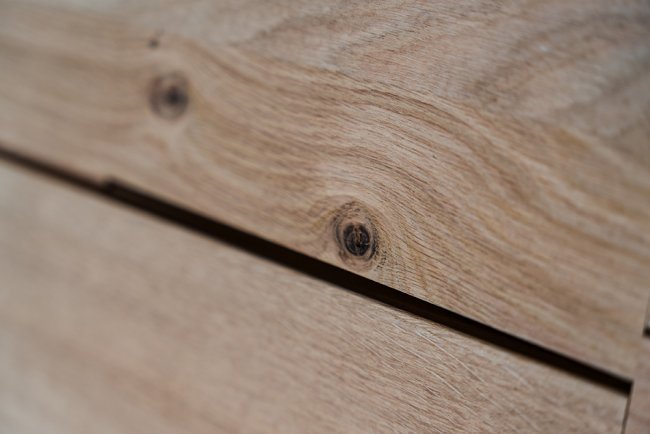
Knots and dots are formed when branches or buds have grown out of the tree trunk
More variation can be introduced at the sawmill. In flat-sawn timber, the grain tends to be more varied and wavy; quarter-sawing highlights the medullary rays in oak. You also see differences between heartwood from the tree’s inner core and sapwood from its outer layers; and how the timber’s dried and stored, its age and so on all have an effect.
All of which is, of course, anathema in conventional large-scale manufacturing, which prizes consistency and uniformity above all things. For us, this variability isn’t a problem to be managed, but a precious gift from Nature to be embraced and celebrated – and everything that makes wood such an endlessly fascinating material to work with.
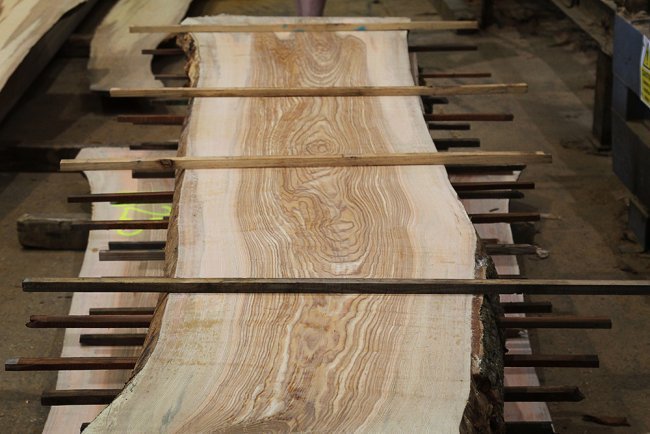
Flat Sawn Grown in Britain Ash
When we examine a section of timber, we don’t see flaws or imperfections to be painted over, sanded out or simply hidden away. Indeed, we often choose to make features of subtle shifts in colour or grain direction, particularly in wide, flat surfaces like table tops and seats. In steam-bent elements such as back-rests and chair arms, using timber with long, flowing grain lines creates a sense of movement and fluidity, as well as adding structural strength. It’s this careful, considered alliance of natural, organic material and human skill and ingenuity that gives our furniture its sense of warmth and life.
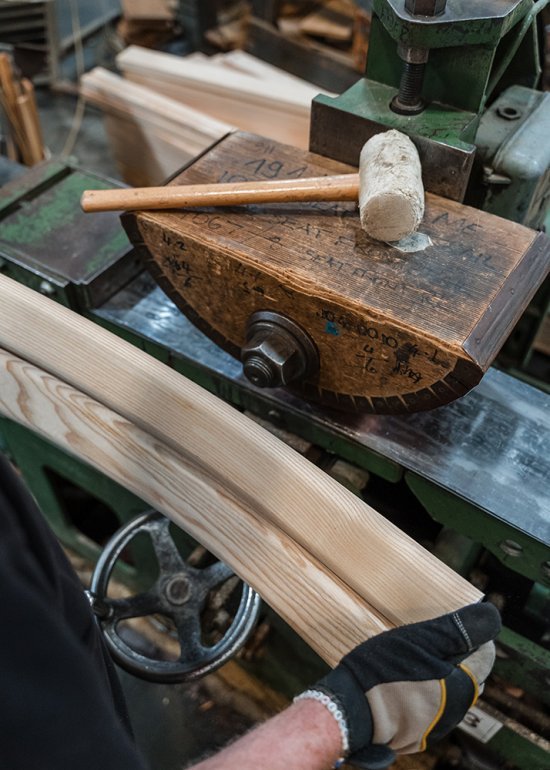
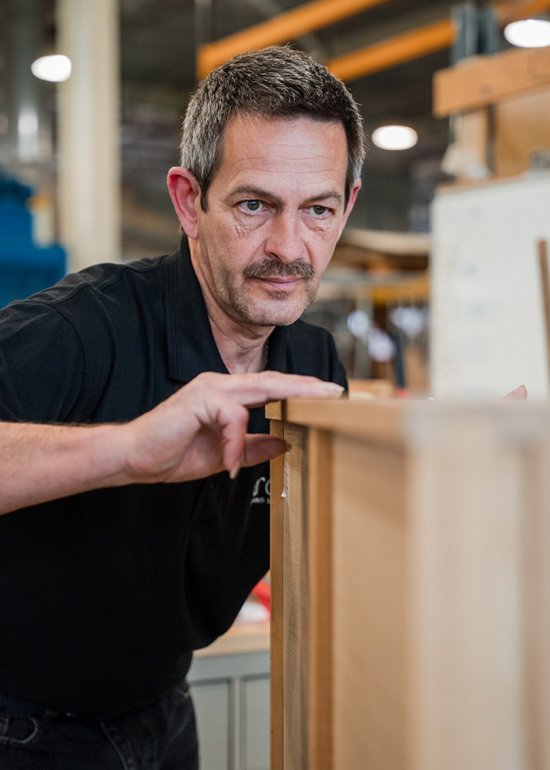
Every piece of timber used is inspected throughout every process
We give Nature a further helping hand with our finishes. Our clear lacquers, waxes and light oils bring the timbers colour, grain and texture vividly to life in all its intricacy and individuality. It’s all part of our understanding of and respect for materiality – how wood’s natural physical and sensory properties contribute to the authenticity and aesthetic value of our products.
For us, the uniqueness and variation in wood is its greatest asset; something not to be hidden or homogenised, but carefully composed and celebrated in everything we make.
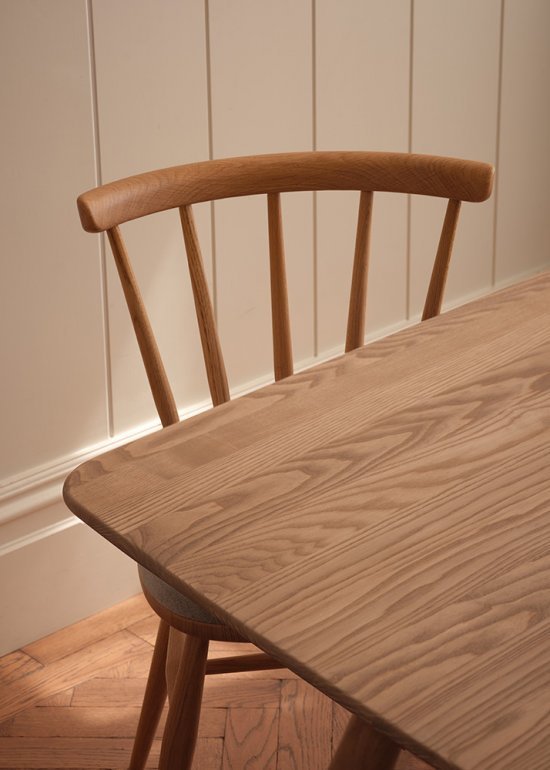
Due to the natural markings and grain of the timber, every piece of ercol furniture is unique
If you would like to keep updated with the latest blogs, new arrivals and the latest offers from ercol, you can sign up to our newsletter here.