Heritage People
The Irreplaceable Human Touch
Machines can cut timber precisely, but can’t judge how to use its innate variation to best advantage. That takes experienced eyes and hands, and the humility to work with Nature, not against it.
Throughout history, the basic process of turning raw timber into a stool, chair, table, box, wardrobe or any other item has remained essentially the same. The skill of the craftsperson has always been to understand each individual step in that process, then have the right tool for the job - and, most importantly, know how to use it.
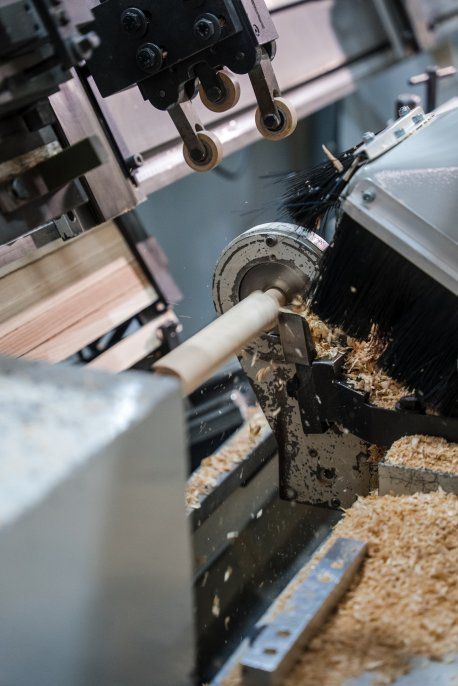
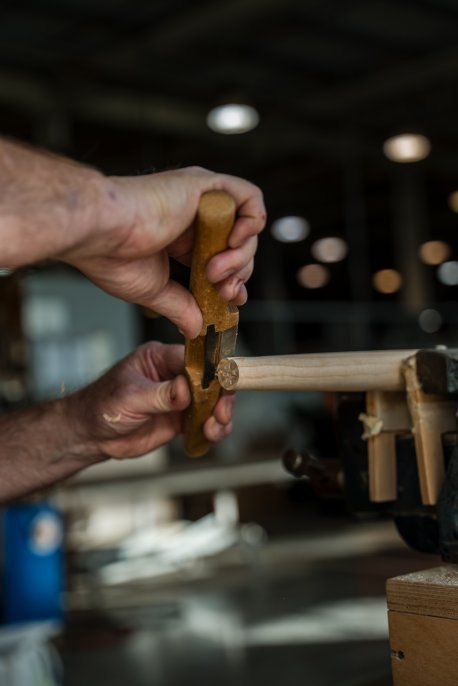
The biggest change has been in the nature of those tools, most obviously at the large-scale end of the industry where ercol operates. The key requirement of efficient manufacturing is being able to make the same product over and over again, quickly, accurately and consistently; and the truth is, machines often deliver that combination better than people can. Using only traditional tools is possible and would be lovely, but it’s just not practical at our scale – and, in the presence of technology, almost wilfully unnecessary.
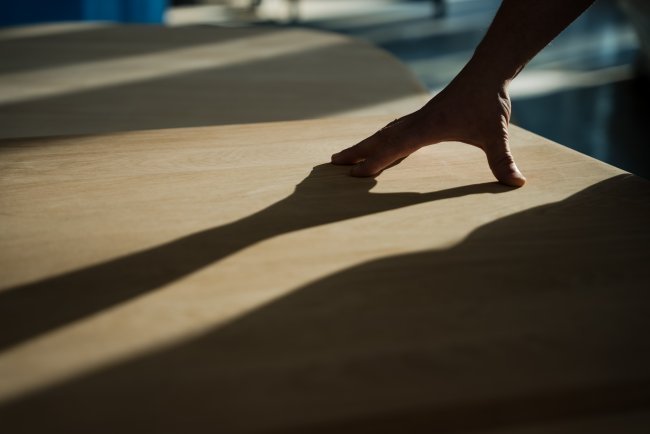
In a competitive commercial world, therefore, purity has to be balanced with pragmatism. But as craftspeople, we’re still deeply rooted in the idea of using the best tool for the job. And at crucial stages in our process, that isn’t a machine at all.
Because while machines offer absolute consistency, timber is infinitely variable: no two pieces are exactly alike in their grain, colour and detail. A machine just does as it’s told, without any aesthetic considerations. At ercol, those decisions still rest entirely with the trained eyes and skilled hands of our craftspeople.
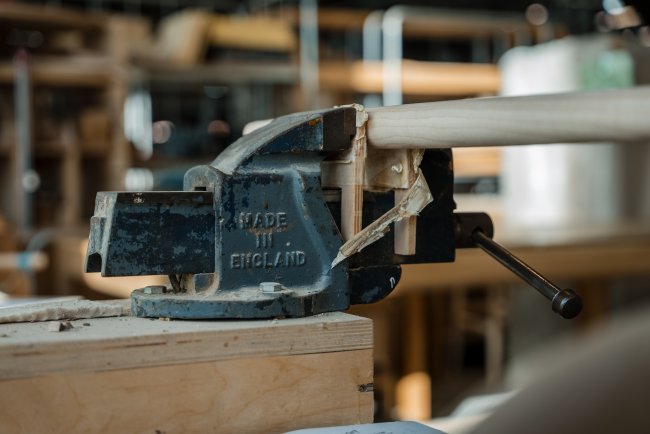
They assess every piece of timber and decide how and where – or even if – it should be used. Applying their skill and expertise, they determine whether it becomes a statement feature, such as a cupboard door, or takes a less visible but equally vital supporting role, like a side panel. It’s then cut by machine, for all the reasons we’ve described; but our craftspeople always apply the final finishing touches themselves, by hand, and judge the overall result by eye and feel.
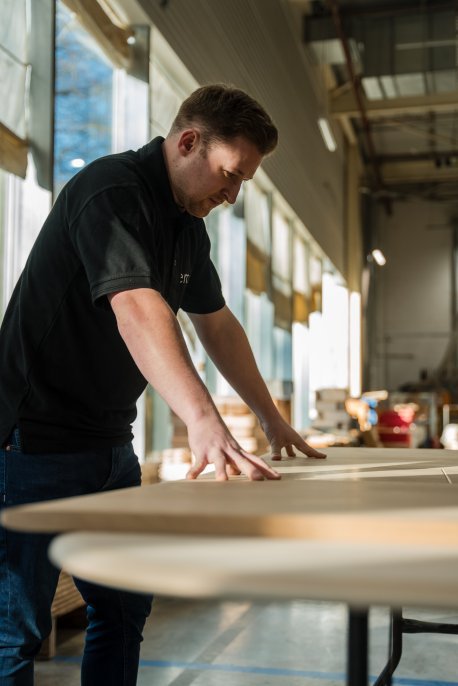
Table top matching - ercol factory
These are matters of individual judgment, long experience and a deep understanding of both materials and aesthetics. It also requires the willingness and humility to work with Nature, not against it.
Automation is intolerant of inconsistencies and abnormalities: craft embraces and celebrates them.
Our craftspeople see the possibilities and opportunities in our raw materials’ natural variation. And there is no machine - at least that we know of - you can teach to do that.
If you would like to keep updated with the latest blogs, new arrivals and the latest offers from ercol, you can sign up to our newsletter here.