Heritage
Tradition and technology in harmony
Machines bring unparalleled consistency and efficiency; but for some tasks, nothing can replace the human hand and eye. Technology and traditional craft skills coexist perfectly at ercol.
Many of our furniture designs have remained unchanged since the 1950s, but how we produce them has evolved significantly.
Perhaps the most transformative tool is the computer numerical control (CNC) machine. The process begins with creating a design using computer-aided design (CAD) software. We then simulate the machining operations and convert them into a set of instructions known as G-code. These instructions are sent to the CNC machine, which executes them with remarkable precision, using appropriate tools for cutting, drilling, carving, and shaping. Basic three-axis machines operate along the three linear dimensions, while more advanced five-axis machines incorporate rotational movements, enabling the creation of complex forms and intricate details.
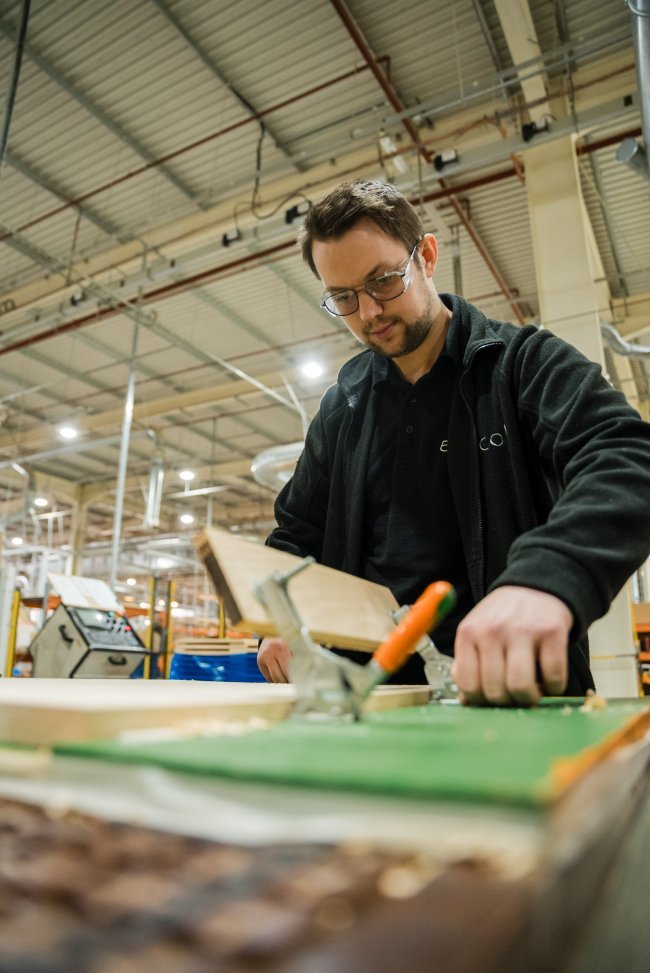
Apprentice working in the ercol factory
Elsewhere in our factory, you’ll find laser cutting tables, ventilated spraying booths, humidity control systems and other modern equipment in constant use. It’s all here for the same reason: to make our manufacturing processes more streamlined, consistent and accurate, and ensure the most efficient use of materials, energy, time and other resources. In turn, that helps maintain our rigorous quality standards, and makes our business more sustainable.
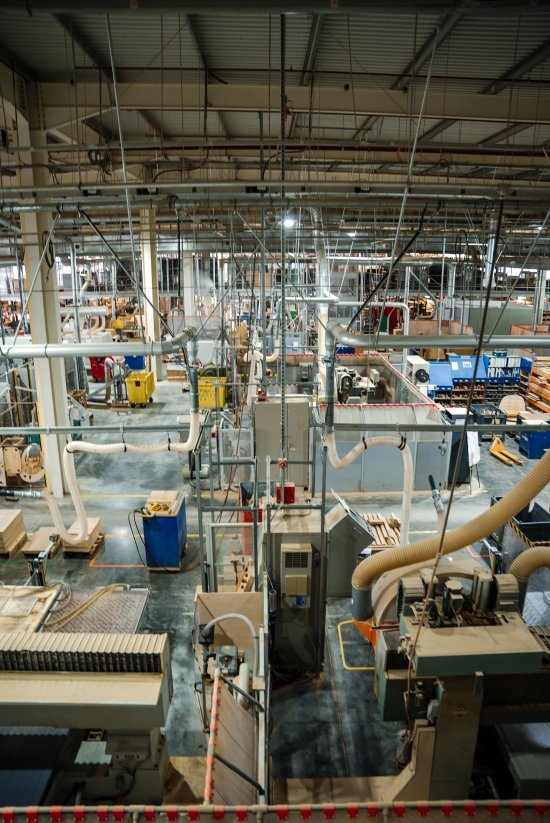
ercol Factory in Princes Risborough
Alongside these hi-tech innovations, we continue to apply time-honoured and traditional skills. In our steam-bending shop, the timber we use in classic ercol designs like our Windsor chair is like stepping back in time. The jigs and frames are the same style we’ve always used; the rich, heady aroma that rises into the air when you open the kiln door is a direct connection to our very earliest days.
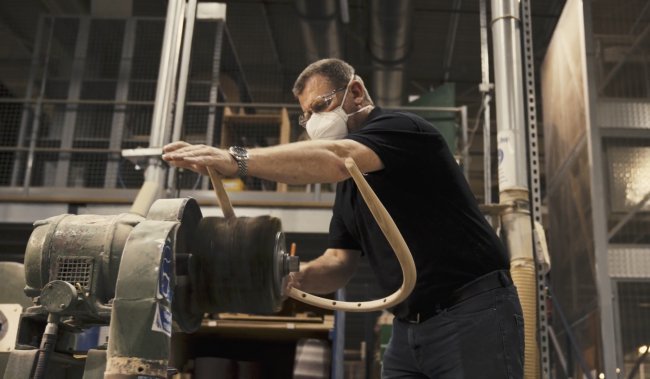
Windsor back bow being sanded
For us, whether to employ modern technology or continue with traditional craft skills is not and never has been in question. Indeed, we see no contradiction between them, and they coexist perfectly in our production process – as they always have.
For example, when we’re finishing milled timber with a belt-sander, a skilled craftsperson judges and controls exactly how much sanding each piece requires. Similarly, for staining and lacquering we use precision spray-guns, controlled not by robots but by specialists who apply a perfectly even coating in a series of smooth, almost balletic movements that are mesmerising to watch.
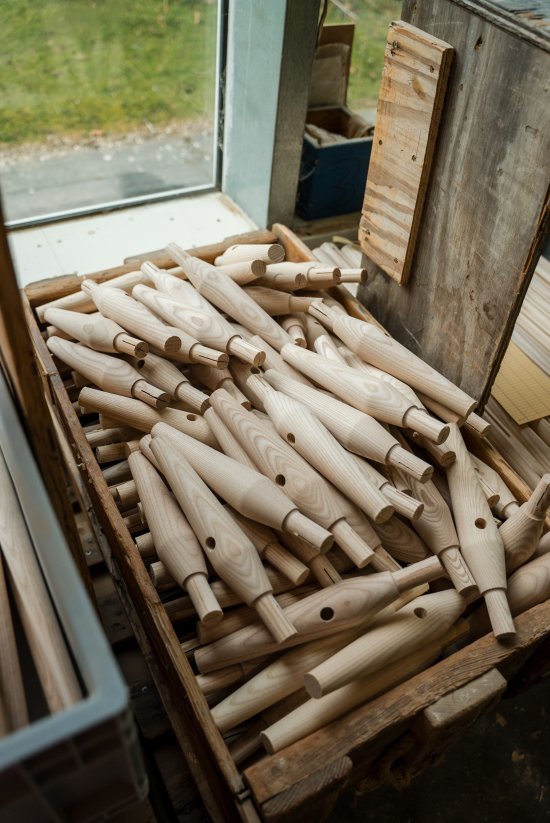
Machined parts, ercol
We work at the interface between two worlds: the old and the new, the traditional and the innovative, the mechanical and the human. It’s an intriguing, stimulating and endlessly fascinating space in which to operate. Yes, we love our CNC machines and other advanced equipment for the speed, precision, consistency and quality they bring to our processes and products. But we’re also convinced that nothing can replace the human hand and eye. And here at least, it never will.
If you would like to keep updated with the latest blogs, new arrivals and the latest offers from ercol, you can sign up to our newsletter here.